
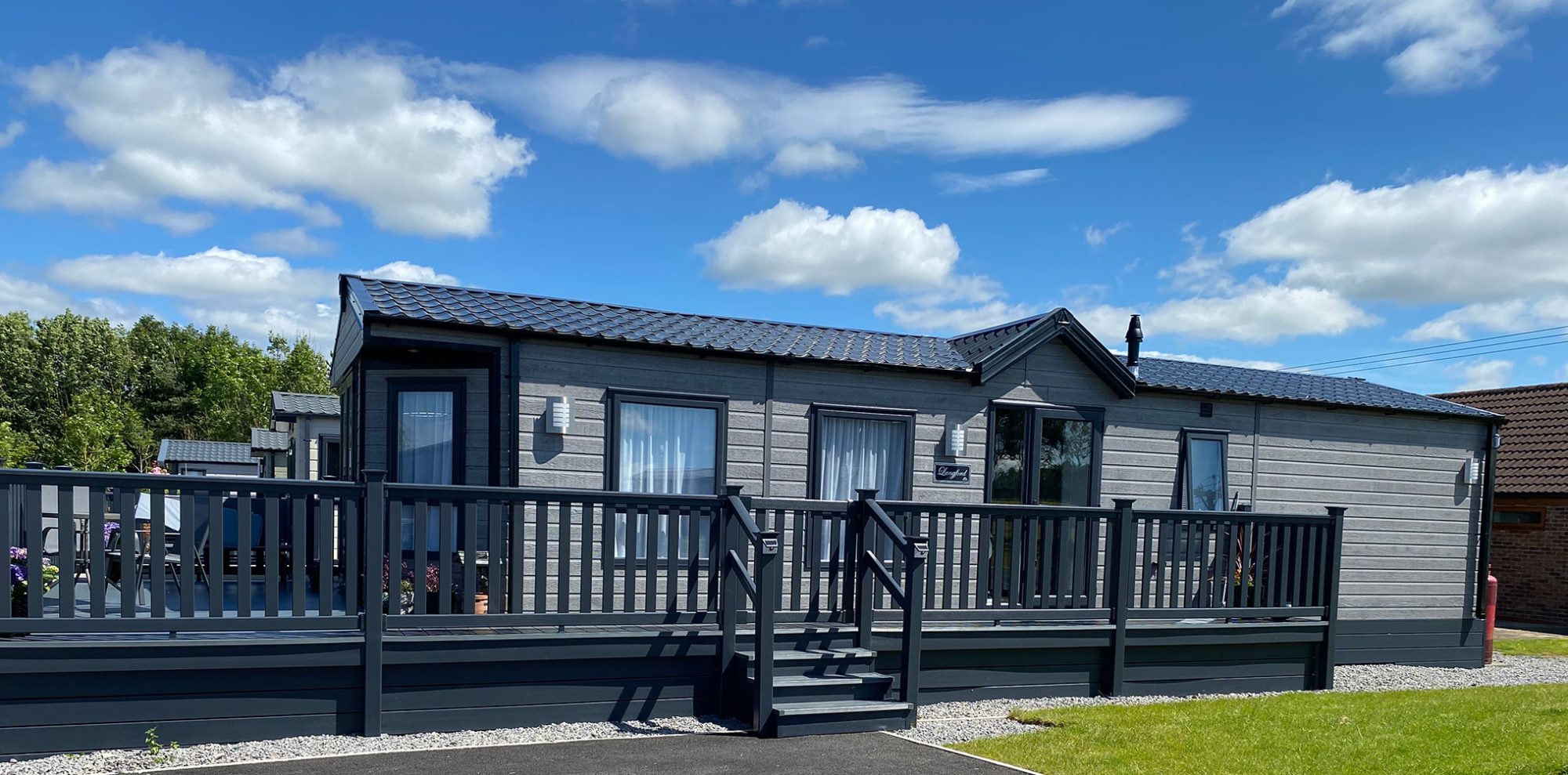
A seasonal pitch changes the feel of touring. Rather than packing everything into the car for every Friday getaway, you can set up a seasonal caravan as a familiar countryside base that is ready when you are. The key is to make it comfortable without cluttering it, practical without making it feel temporary, and secure enough to leave with confidence between visits.
For couples, families and keen anglers, the appeal is simple: less time setting up and more time enjoying the break. A well-planned caravan can become the place where the kettle is on quickly, the walking boots have their usual home and a quiet morning by the lake feels wonderfully easy.
Start with the pitch and park rules
Before buying storage boxes or outdoor furniture, get clear on what your chosen park permits. The phrase “seasonal caravan” can mean different things. Some parks offer a touring pitch for an extended period, while others allow a caravan to remain on the pitch all year, subject to licence terms, attendance requirements and winter arrangements.
Ask about the length and width of the pitch, electric hook-up, water points, awning rules, parking, drainage and whether you can leave items outside. It is also sensible to check access hours, security arrangements and what happens if severe weather is expected. These details shape what will be useful, rather than simply what looks good in a showroom.
Location on the park matters as much as the pitch itself. A lakeside view, a quieter corner or an easy walk to the shower block will appeal to different people. If you plan to fish regularly, being close to the water may be a real advantage. If you expect grandchildren to visit, convenient parking and safe walking routes could matter more.
Setting up a seasonal caravan from day one
Your first visit should focus on the essentials. Take time to level the caravan correctly, secure the steadies and make sure doors, windows and lockers open and close as they should. A caravan that feels slightly uneven can soon make cupboards awkward, affect appliances and spoil a relaxing stay.
Connect to the electric hook-up using a suitable, tested lead and keep cables tidy and protected. Inside, check that the consumer unit, sockets, lights, heating and fridge are all working properly. If your caravan has gas appliances, make sure the cylinder is secure, hoses are in good condition and you know where the isolation points are. Carbon monoxide and smoke alarms should be fitted, working and tested regularly.
It helps to approach the first set-up in layers. Begin with safety, utilities and bedding. Then add cooking equipment and toiletries. Once those basics are covered, you can decide what will genuinely improve your time away. This prevents a small touring caravan from becoming filled with duplicate mugs, coats and items that never leave a cupboard.
Give everything a proper place
Seasonal use is easier when you can arrive, unpack a small food bag and settle in within minutes. Use lightweight boxes or drawer organisers for the things that stay in the caravan, such as tea towels, games, basic medicines and fishing accessories. Label storage where it is not obvious, especially if more than one person uses the caravan.
Keep heavier items low down and distribute weight sensibly. A large outdoor storage box may be useful if the park allows one, but it should be weatherproof, lockable and positioned so it does not block access or spoil the pitch. Never store gas cylinders, fuel or anything damp alongside soft furnishings.
A simple welcome cupboard can make every arrival feel easier. Stock it with cleaning spray, bin bags, a torch, spare batteries, washing-up liquid, a first-aid kit and a few long-life basics. It is a small detail, but it saves an unnecessary shop run when you would rather be out enjoying the fresh air.
Make it feel like your own retreat
The best seasonal caravans feel personal, but not overloaded. Good bedding, a warm throw and decent pillows make a bigger difference than lots of decorative extras. Choose washable fabrics and practical floor mats, particularly if you will be coming in after a walk, a rainy afternoon or a day on the fishing lake.
Lighting deserves attention too. Battery-operated lamps or soft LED lights can make evenings feel more relaxed without using valuable worktop space. During the day, keep window areas clear enough to enjoy the view and make the caravan feel open.
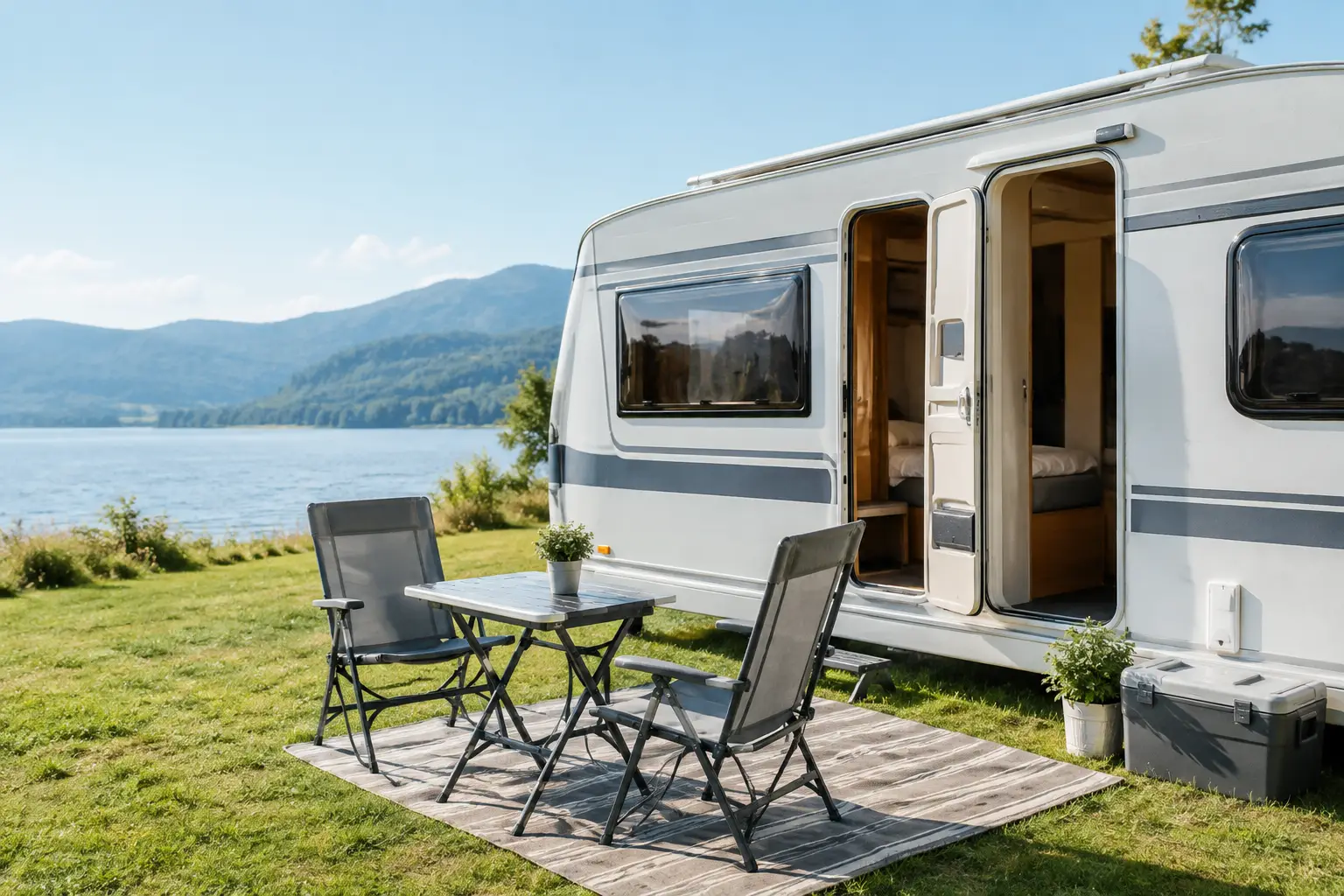
Outside, think about how you actually spend your time. Two comfortable chairs and a small table can be enough for morning coffee or an evening drink. If an awning is permitted, it can provide welcome extra space for wet coats, walking boots and fishing tackle, but it also needs regular checks. Wind, rain and fallen leaves can quickly turn an unattended awning into a problem.
At a park with amenities nearby, there is no need to bring every convenience from home. Modern washrooms, Wi-Fi and an on-site café can keep your caravan lighter and your stay more relaxed. At Parklands Caravan Park, the combination of touring facilities, fishing lakes and countryside surroundings makes it particularly easy to plan days that are as active or as quiet as you wish.
Prepare for changing North Yorkshire weather
A seasonal set-up needs to cope with bright spring mornings, warm summer days and colder, wetter spells later in the year. Ventilation is one of the most important habits. Open vents as intended, avoid drying lots of wet clothing inside and leave cupboard doors slightly open when the caravan will be empty for a while. This helps reduce condensation and musty smells.
In colder weather, follow the manufacturer’s guidance for heating and water systems. If you are leaving the caravan during a frost risk, draining down may be necessary. Do not assume that leaving the heating on is always the right answer – it depends on the caravan, the park’s rules, insulation, cost and how often you visit.
Check seals around windows, rooflights and locker doors throughout the season. Catching a small leak early is far easier than dealing with damp in cushions, flooring or wallboard. Sweep leaves away from steps and drainage areas, and keep an eye on the condition of the roof after high winds.
Leave it secure between visits
Security is about sensible routines rather than worrying about every possible scenario. Lock doors, windows and external lockers each time you leave. Consider hitch and wheel locks suitable for your caravan, and keep valuables out of sight or take them home. It is also worth photographing the caravan and noting serial numbers for insurance records.
Before setting off, turn off appliances that do not need to remain on, check taps and water connections, and empty food that could spoil. A quick departure checklist kept by the door makes this much easier. It might take two minutes, but it gives you confidence on the journey home.
Keep the caravan ready, not forgotten
A seasonal caravan still benefits from regular attention, even when you cannot stay overnight. A short visit to air it, inspect for damp and check the outside condition can prevent minor jobs becoming expensive repairs. Use those visits as a chance to refresh supplies and make small improvements before your next proper break.
The most successful set-up is not the one with the most equipment. It is the one that suits the way you want to spend your holidays: a comfortable bed after a day outdoors, a tidy space for unhurried breakfasts and a dependable base waiting for you in the countryside. Set it up thoughtfully, look after it through the seasons, and each return will feel less like arriving at a pitch and more like coming away to your own place.